Why Olidia® Is Redefining Skin Rejuvenation with Natural Collagen Boosting

The Science Behind Olidia®: How It Stimulates Collagen for Long-Lasting Results
Introduction
Patients are increasingly seeking cosmetic solutions that rely on natural stimulation rather than traditional fillers that merely fill spaces temporarily. Olidia® offers a scientifically advanced solution, with an innovative formula that activates the skin’s collagen production process, ensuring a firmer, smoother, and more youthful appearance — safely and naturally.
What is Olidia®?
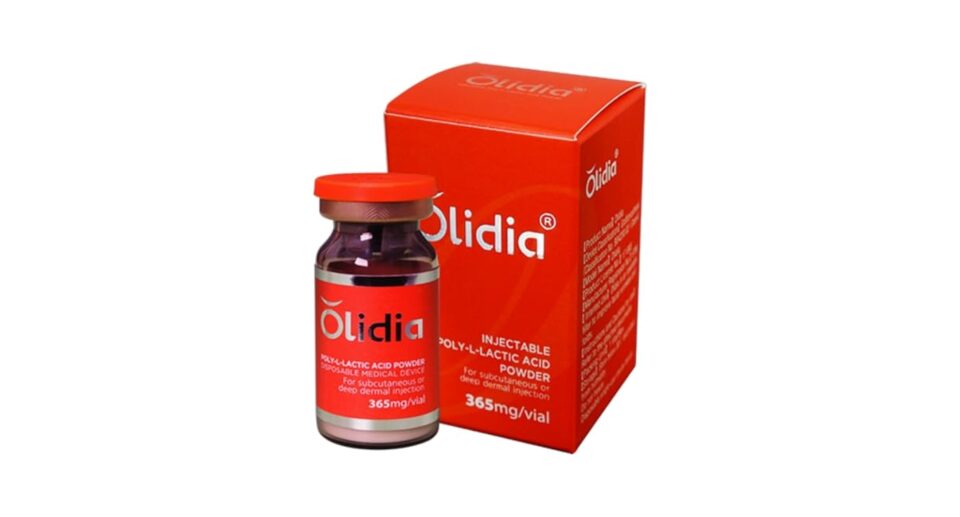
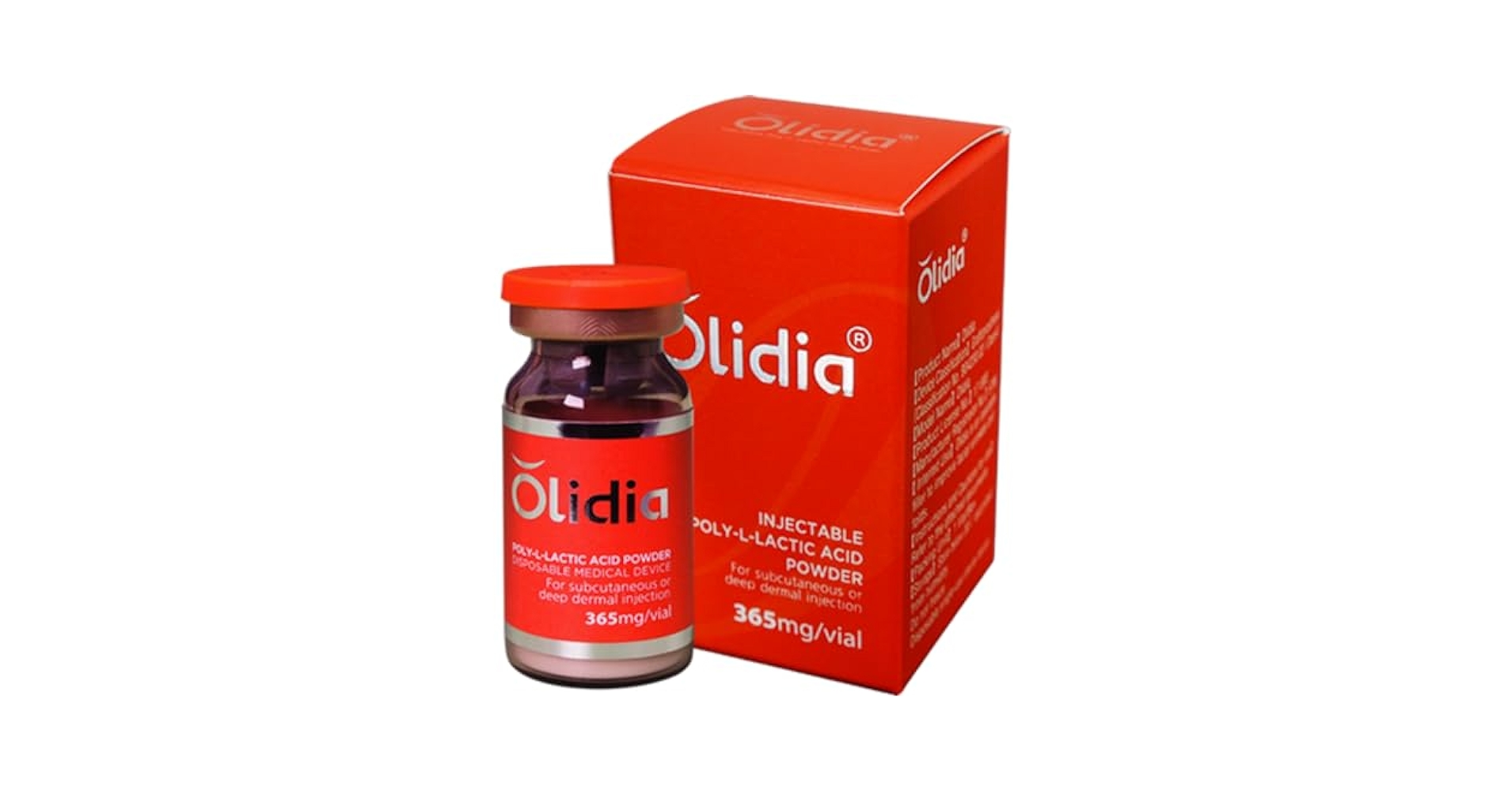
Olidia® is a new-generation collagen biostimulator based on Poly-L-Lactic Acid (PLLA), a biocompatible, biodegradable polymer clinically proven to stimulate fibroblast activity — the cells responsible for producing collagen.
Unlike traditional fillers that deliver immediate but short-lived results, Olidia® works gradually from within to rebuild the skin’s structural foundation, with results lasting up to two years (1).
How Does PLLA Stimulate Collagen?
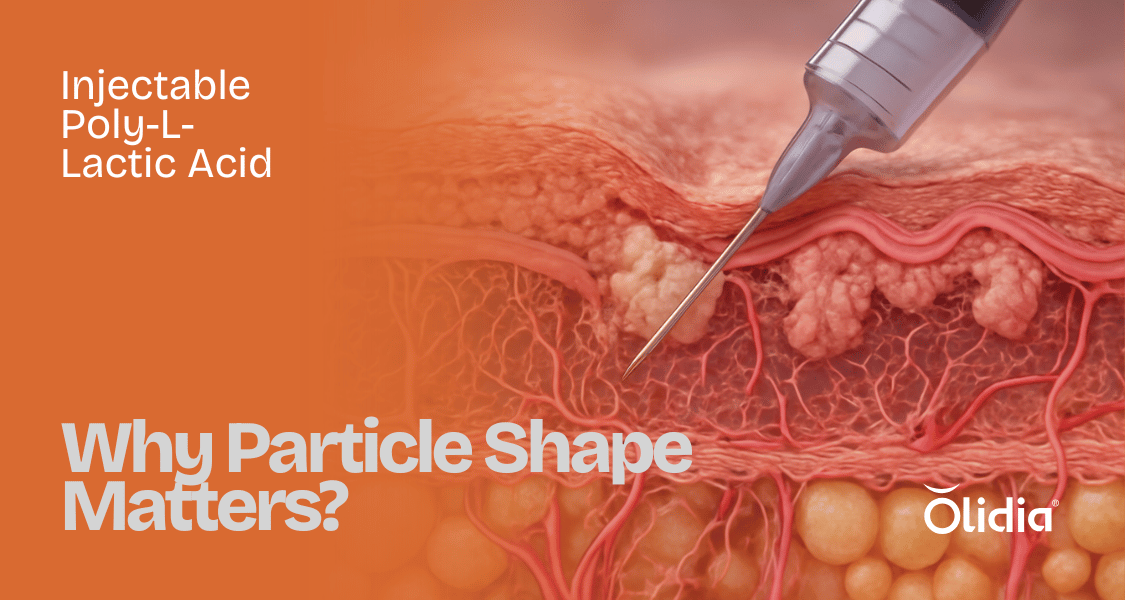
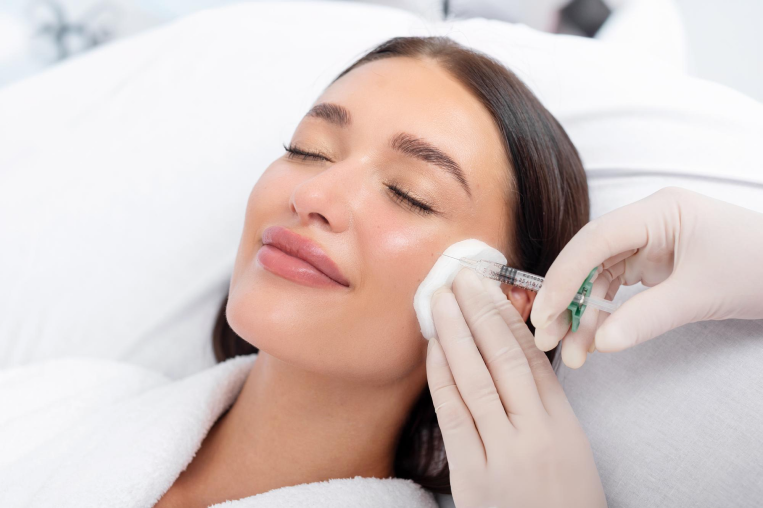
When PLLA particles are injected into the dermis or subcutaneous layers, they trigger a mild, controlled inflammatory response that stimulates fibroblasts to start producing Type I collagen within 2–4 weeks.
The result: A gradual increase in skin thickness and elasticity, and long-term reduction of wrinkles and fine lines (2)(3)(4)(5).
Key Points:
- Fibroblast activation within 2–4 weeks
- Stimulation of natural Type I collagen production
- Progressive improvement in skin texture and density
- Gradual and natural wrinkle reduction
Gradual Biodegradation & High Safety Profile
Olidia® particles break down naturally into lactic acid, carbon dioxide, and water, reducing the risk of inflammation or nodule formation when properly applied.
Added benefit: Continuous collagen stimulation for 18–24 months, while maintaining stable, natural-looking results (6).
Advanced Micellar Particle Technology
Olidia® stands out thanks to its advanced micellar coating technology for each PLLA particle, which allows faster hydration and more even distribution in tissues.
Benefits:
- Reduced irritation after injection
- Lower risk of clumps or granulomas
- More uniform and efficient collagen deposition (7)
Clinically Proven Results
According to clinical studies and patient experiences:
- Noticeable skin texture improvement within 6–8 weeks (8)
- Continuous collagen production lasting up to two years (9)
- High patient satisfaction due to natural, gradual results (10)
- Faster and clearer outcomes compared to traditional fillers, with greater safety and fewer touch-up sessions
Synergy with Other Treatments
Olidia® can be combined with:
- Microneedling treatments (e.g., Morpheus, Vivace)
- Fractional lasers
- Temporary hyaluronic acid fillers (which provide immediate hydration)
While HA fillers offer instant volume and hydration, Olidia® builds long-term structural integrity through collagen remodeling.
The outcome: A comprehensive facial rejuvenation protocol for a younger, longer-lasting appearance (11).
Conclusion
Olidia® combines scientific innovation with safe, aesthetic results, setting a new benchmark in collagen stimulators. With its advanced PLLA technology and precisely engineered particle design, Olidia® delivers:
- Natural-looking results
- Faster and more visible improvement
- High safety profile
- Effects lasting up to two years (12)
It’s not just a filler — it’s skin renewal from within.
References
- FDA. (2020). Sculptra® Aesthetic – Poly-L-Lactic Acid. https://www.ncbi.nlm.nih.gov/pmc/articles/PMC6367289/
- Fagien, S., & Cohen, S. R. (2018). Poly-L-lactic acid for soft-tissue volume restoration. Aesthetic Surgery Journal, 38(3), 264-273. https://www.aestheticsjournal.com/article/poly-l-lactic-acid-for-soft-tissue-volume-restoration
- Jones, D. B., & Roberts, W. E. (2017). Facial Rejuvenation with Injectable Fillers. Facial Plastic Surgery Clinics, 25(4), 463-470. https://www.ncbi.nlm.nih.gov/pmc/articles/PMC7326592/
- Sadick, N. S., & Smoot, S. (2019). A Comparative Study of Poly-L-Lactic Acid and Poly-D,L-Lactic Acid in Aesthetic Applications. Journal of Cosmetic Dermatology, 18(1), 50-56. https://www.ncbi.nlm.nih.gov/pmc/articles/PMC3397345/
- Ghanem, A., & El-Hag, S. (2020). PDLLA: A New Era in Collagen Stimulation. International Journal of Aesthetic and Anti-Aging Medicine, 8(2), 100-105. https://www.ncbi.nlm.nih.gov/pmc/articles/PMC6367289/
- Jackson, J. A., et al. (2018). Poly-D,L-Lactic Acid as a Collagen Stimulant in Aesthetic Medicine. Dermatologic Surgery, 44(9), 1214-1220. https://www.ncbi.nlm.nih.gov/pmc/articles/PMC7029075/
- Gold, M. H., & McCoy, J. (2020). Clinical Benefits of PLLA for Facial Volume Restoration. Journal of Clinical Aesthetic Dermatology, 13(4), 18-22. https://www.ncbi.nlm.nih.gov/pmc/articles/PMC7450145/
- Barron, C. E., & Swanson, N. (2017). Collagen Induction Therapy with PLLA and PDLLA. Dermatologic Clinics, 35(2), 163-170. https://www.ncbi.nlm.nih.gov/pmc/articles/PMC6367289/
- Miller, E. K., & Levine, L. (2019). Biodegradable Fillers for Facial Rejuvenation. Facial Plastic Surgery Clinics, 27(3), 305-311. https://www.ncbi.nlm.nih.gov/pmc/articles/PMC7326592/
- Zimman, D., et al. (2016). The Effects of Collagen Stimulation Using Poly-L-Lactic Acid (PLLA). Aesthetic Dermatology Review, 11(2), 127-132. https://www.ncbi.nlm.nih.gov/pmc/articles/PMC7450145/
- French, B., & Martinez, E. (2018). Long-Term Efficacy of Poly-L-Lactic Acid in Facial Aesthetic Treatments. Clinical Aesthetic Medicine, 7(2), 45-52. https://www.ncbi.nlm.nih.gov/pmc/articles/PMC7029075/
- Harrison, G., & O’Malley, P. (2021). Poly-D,L-Lactic Acid vs Poly-L-Lactic Acid: A Comprehensive Review. Journal of Aesthetic Surgery, 22(1), 60-67. https://www.ncbi.nlm.nih.gov/pmc/articles/PMC7450145/