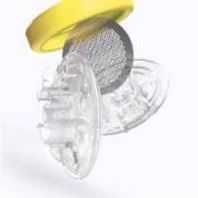
Autologous Exosomes for Wound Healing: Chronic and Post-Surgical Wounds

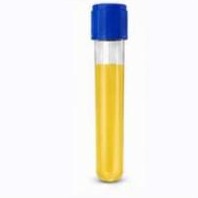
Wound healing is one of the clinical fields where autologous exosome-rich plasma is applied. In chronic or post-surgical wounds, exosomes stimulate fibroblast proliferation, endothelial sprouting and keratinocyte migration. Their anti-inflammatory action helps re-establish balance in non-healing wounds and shortens the time to closure.
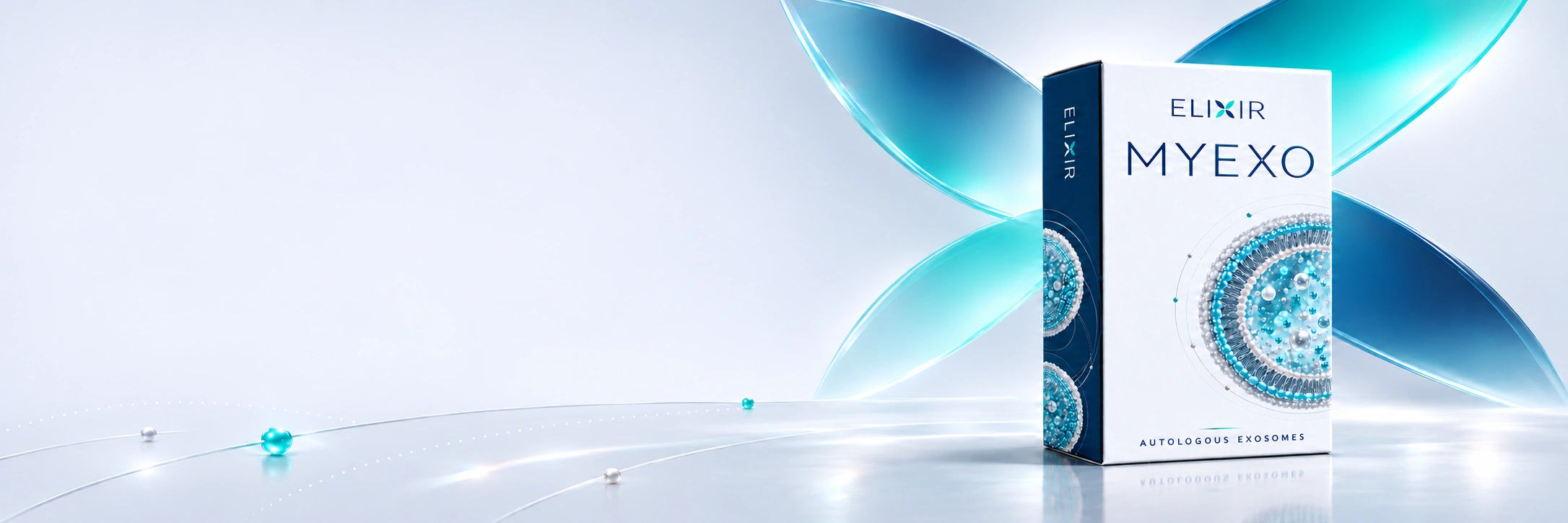
MyExo delivers 12 trillion exosomes in a 10 mL final volume, with an average exosome size of 120 nm (±15).
Four mechanisms working together
- Cellular communication: regulatory RNAs and proteins support cell survival, proliferation and differentiation, and promote neovascularisation in endothelial cells
- Growth-factor cooperation: PDGF, VEGF, TGF-β and IGF-1 attract cells to the injury site, stimulate matrix deposition and improve vascular supply
- Inflammation resolution: macrophage polarisation shifts away from IL-1β and TNF-α toward IL-10 and TGF-β
- Structural remodelling: a temporary fibrin–exosome scaffold supports organised, vascularised tissue rather than fibrotic scar
Why autologous
MyExo is prepared from the patient’s own blood in a closed system at the point of care, with no donor material and no additives, which avoids donor-source variability and supports biocompatibility.
Learn more about the kit, its components and laboratory characterisation on the MyExo product page, or contact our team on WhatsApp +971 52 124 4440.
What the Research Says
Laboratory and animal research helps explain how platelet-derived exosomes may support healing in difficult wounds such as diabetic ulcers.
- Diabetic wound model (Cao et al., iScience, 2023): exosomes from PRP carried the growth factors PDGF-BB, VEGF and bFGF. In high-glucose conditions they protected skin fibroblasts from cell death, restored their growth and migration, and in diabetic rats they increased collagen deposition, new blood vessel formation and wound closure. The protective effect was traced to the PDGF-BB/JAK2/STAT3 signalling pathway.
- Activation method (Rui et al., Cell Transplantation, 2021): the way platelets are activated changed both the number of exosomes released and their growth-factor content (VEGF, PDGF-BB, bFGF, TGF-β), and therefore their effect on blood-vessel cells. The growth factors were found mainly inside the exosomes rather than in the surrounding fluid.
These are pre-clinical studies, performed in cells and animals, with laboratory-isolated exosomes rather than MyExo. They support the biological rationale for platelet-derived exosomes in wound care; clinical decisions remain with the treating physician.
References: Cao W, et al. Exosomes derived from platelet-rich plasma promote diabetic wound healing via the JAK2/STAT3 pathway. iScience. 2023;26:108236. doi:10.1016/j.isci.2023.108236 · Rui S, et al. Comparison and Investigation of Exosomes Derived from Platelet-Rich Plasma Activated by Different Agonists. Cell Transplant. 2021;30:1–13. doi:10.1177/09636897211017833
For healthcare professionals. Product information is provided by the manufacturer (t-lab) and is general in nature; it is not medical advice. Treatment decisions should be made by a qualified physician. MyExo by Elixir is distributed by Bionics Medical in the UAE and Saudi Arabia.