Exosomes and Erectile Dysfunction: What the Research Says

Erectile dysfunction (ED) is one of the most common conditions in men over 40. In many men it has a vascular cause: reduced blood flow and damage to the smooth muscle and lining of the erectile tissue. Tablets such as PDE5 inhibitors treat the symptom but do not repair the tissue, which is why regenerative medicine is looking at platelet-rich plasma (PRP) and, more recently, exosomes.
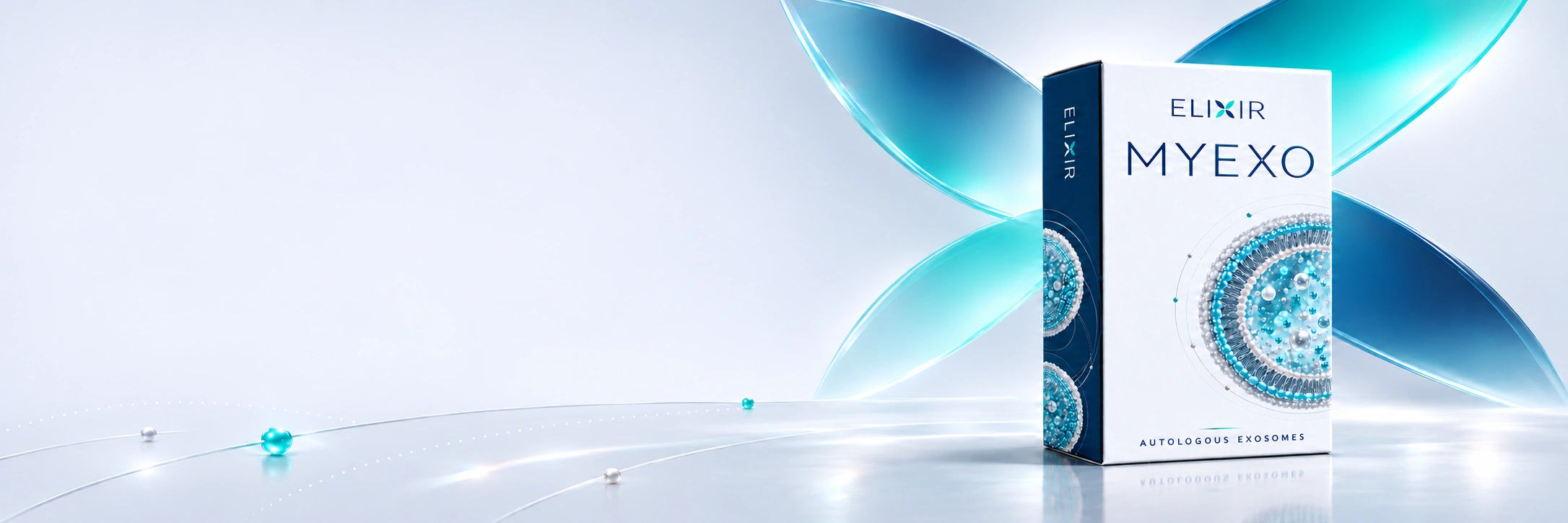
MyExo delivers 12 trillion exosomes in a 10 mL final volume, with an average exosome size of 120 nm (±15).
Why exosomes are being studied in ED
Exosomes are nanoscale vesicles that carry proteins, growth factors and microRNA between cells. Platelet-derived exosomes carry growth factors such as VEGF, PDGF-BB and bFGF, which are linked to new blood-vessel formation and tissue repair in laboratory studies. Because vascular damage lies behind much ED, this regenerative signalling is the scientific rationale for research in men’s sexual health.
What the research shows so far
- Animal studies: a 2023 systematic review and meta-analysis in Sexual Medicine found that stem cell–derived exosomes improved erectile function in rat models of ED, apparently by restoring the microstructure of the erectile tissue. A 2023 review in Frontiers in Endocrinology summarised the same body of animal research as a basis for future clinical trials.
- PRP in men: a randomised placebo-controlled trial of 50 men with vasculogenic ED, published in the Arab Journal of Urology, compared PRP injections with placebo for effectiveness and safety, and reported a significant difference from placebo in the mild-ED subgroup at 3 and 24 months.
- PRP-derived exosomes in men: a feasibility trial in Greece (NCT07124871) began recruiting in 2025 to test PRP-derived exosome injections in 30 men with mild-to-moderate vasculogenic ED, using the International Index of Erectile Function (IIEF) as its main outcome. Its results have not yet been published.
Where the evidence stands
For ED, exosome therapy is still at an early clinical stage: the strongest data come from animal models, and human trials are ongoing. There is not yet a published clinical study of MyExo in erectile dysfunction, and MyExo should not be presented to patients as a proven ED treatment. Any use in men’s sexual health is a decision for a qualified urologist or andrologist after a full assessment, including a check for the cardiovascular conditions that ED can signal, and in line with local regulations.
Bionics Medical follows this field closely and will share new clinical data with our partner physicians as it is published.
References: Effects of stem cell–derived exosome therapy on erectile dysfunction: a systematic review and meta-analysis of preclinical studies. Sex Med. 2023;11(2):qfac019. doi:10.1093/sexmed/qfac019 · Feng H, et al. Erectile dysfunction and exosome therapy. Front Endocrinol. 2023;14:1123383. doi:10.3389/fendo.2023.1123383 · Safety and efficacy evaluation of intracavernosal injection of platelets rich plasma in treatment of vasculogenic erectile dysfunction. Arab J Urol. 2025;23(2):160–166. doi:10.1080/20905998.2024.2424459 · ClinicalTrials.gov NCT07124871.
For healthcare professionals. This article summarises published research and is general in nature; it is not medical advice. Treatment decisions should be made by a qualified physician. MyExo by Elixir is distributed by Bionics Medical in the UAE and Saudi Arabia.